Posted by: helenrortvedt | 7 June 2009

Ready for departure

Just a quick note to inform my dear blog readers of my next adventure.  In just over a week, I’ll fly to California to begin staff training with a company called Where There Be Dragons.  Following two weeks in CA, I will be working with a team of two other fabulous instructors and nine students.  Together, we will travel back to the land that has painted all of my dreams since I left.  We will wander throughout the country in search of adventure, Mother Earth, broadened horizons, a sense of awareness and a greater understanding of our world and of ourselves.  It feels so good to be headed home.  

Bolivia.

She changed my life once before.  I have confidence that she’ll do it again.

Feel free to follow our adventure on the Dragons’ website: http://wheretherebedragons.com/yakyak.php

Just choose the “Bolivia Summer 2009″ course from the “Current Courses” drop down menu.

Be well.

Wajkutikama, masisniy.

Until next time, my friends.

Posted by: helenrortvedt | 22 March 2009

From the homefront

Six months ago today I was driven in a Land Cruiser from the “Huampani Vacation Center” to the Peace Corps office in downtown Lima.  The last official act of the Peace Corps on my behalf after closing my service after evacuation.  From the moment I walked out of the office and into the chaotic Lima streets, I was no longer a PCV.  Just an ordinary American girl navigating the South American continent on her own.  The six months that have passed since then have been a bit of a whirlwind.  Over four of them spent in South America still, and in five different countries (Peru, Bolivia mostly, Argentina, Uruguay and Paraguay).  I returned home in early February to the calm and comfort of Ivy Street.

I imagine that any of you reading this already know, but I decided around that time that I would withdraw from the training class that departed for Peace Corps/Ecuador on February 24th.  Lots of months of deliberation, long conversations with many friends and family members and long silent discussions with myself later, I decided that I was just not in the right place.  I have come to terms with the fact that Bolivia WAS my Peace Corps service.  It was not 27 months.  Nowhere close.  But it left an indelible mark on me.  And what’s more: I was (am) genuinely excited about other jobs, about grad school, and the thought of starting all over again with training in another country was honestly exhausting.

I am home for now, and it is wonderful.  I am actively seeking employment in Latin America (and elsewhere, but I know where my heart is…)

My heart wrenched a little the other day when I learned of the suspension of the Peace Corps program in Madagascar.  Those were tough days for us Bolivian volunteers last September.  My heart goes out to the Madagascar volunteers who now find themselves in a hotel somewhere in South Africa being asked to decide what’s next while trying to process the goodbyes that were left unsaid, the projects unfinished, the lives flipped upside down…

But, on a lighter note: March definitely came in like a lion with a 6 to 8 inch blizzard, and is now fixing to go out like a lamb with the Cherry Blossoms popping out, grills firing up and lawns played in with bare feet. Spring! Virginia’s second best season.  It’s come.

img_0598

Shortly after I got home, a bunch of former Bolivia PCVs showed up in Washington under the guise of “attending a job fair”.  Really, it was just a good excuse to catch up, drink beers together and laugh together about how weird we have all become in the context of “home”. Here we are (me, Diana & Russ) on the steps of the Lincoln Memorial.

img_0022

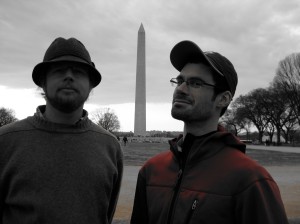
Russ and Ryan in front of the Washington Monument.

img_0054

Great Falls in all of it’s mid-Winter glory. Brrrr!

img_0173

Unfortunately, our sled was designed and built for 50 pound children.  It lasted about 4 runs.  But we had a grand old time.

img_0176

Snow is beautiful.  But cold…

img_0194

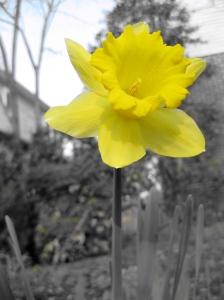
The trusty, hearty harbinger of spring.  A welcome friend.

Posted by: helenrortvedt | 7 February 2009

369 Days in South America

One year and three days after I touched down on the South American continent’s highest commercial airport in La Paz, Bolivia, I went wheels up from Buenos Aires’ sea-level international airport bound for an icy Washington, DC.

And what a year it was. It took place predominantly in Bolivia, but with geographical cameos from Peru, Argentina, Uruguay and Paraguay as well. Largely unpredictable, but altogether fulfilling, January 30, 2008 to February 2, 2009 meant a lot to me.

I want to take a moment to say thank you to all of you who have supported and followed me through the adventures and trials of my South American sojourn. Gracias. Pachi. Thank you.

Life doesn’t always turn out the way you expect it to.  In fact, it never does.  And this year was certainly proof of that.

Bottom line: I am infinitely grateful for my experience in Bolivia.

I am inspired by the many people I met along the way.

My dreams are forever colored by the awesome landscapes, traditions and people of my beloved Bolivia. Thank you, Bolivia, for that invaluable gift.

In the spirit of recognizing the passage of time, I have chosen 12 images which I feel represent the passage of one year in my life. Please enjoy.

FEBRUARY 2008

dscf3540

Cochabamba, Bolivia.

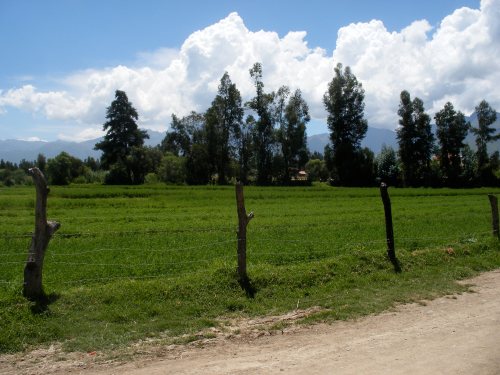
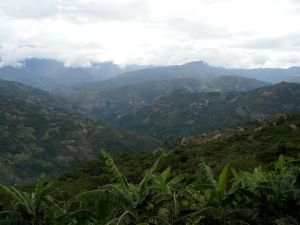
Arriving mid-rainy season, the Cochabmaba Valley was awash with green. A breathtaking first impression of a country I would grow to love immensely

MARCH 2008

dscf3725

Camiri, Santa Cruz, Bolivia.

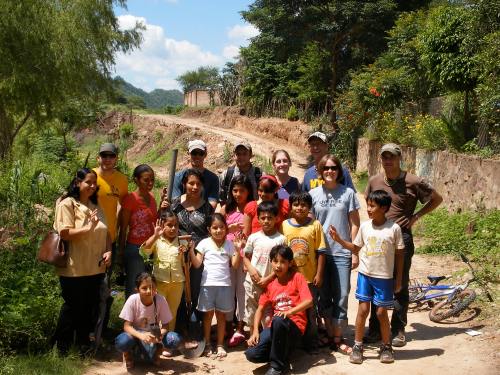
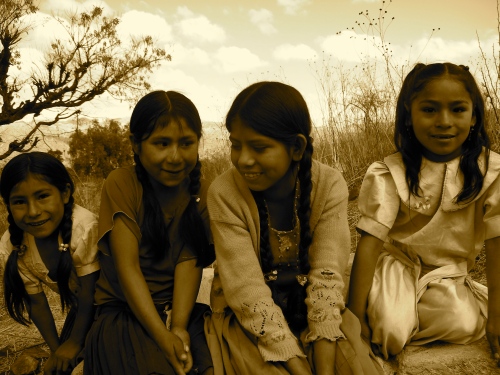
Our “Tech Week” travels brought us to the Chaco Boliviano. And we met some incredible kids along the way.

APRIL 2008

dscf0095

Cochabamba, Bolivia.

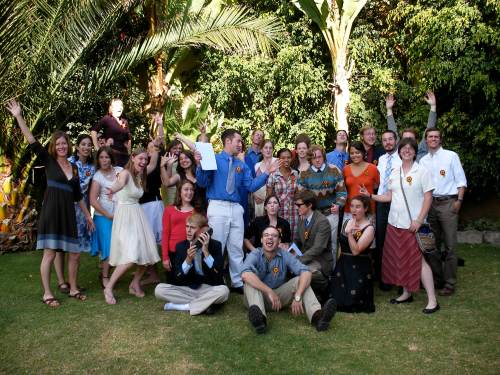
B-47 Swear In. Wish we hadn’t made all those jokes about being “the last training group in Bolivia”… Sometime you get what you wish for. Nevertheless, an honor to be a part of this crazy bunch of volunteers, now scattered across America and the Globe.

MAY 2008

dscf0535

La Palma, Chuquisaca, Bolivia.

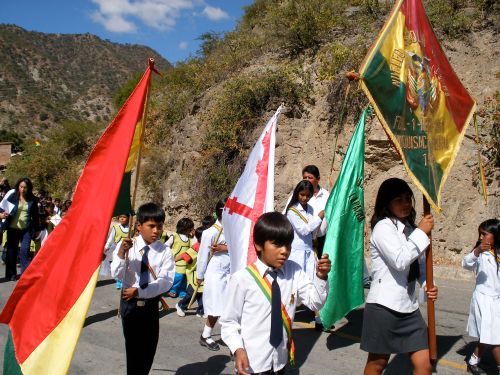
Children of La Palma parade through town (the highway) on the 25th of May, which is the departmental holiday of Chuquisaca.

JUNE 2008

dscf0790

Tarvita, Chuquisaca, Bolivia.

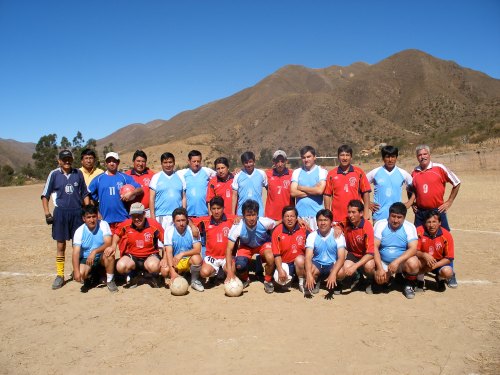
I had the great fortune to travel with the teachers from my school in La Palma across the department to Tarvita. Here, the male teachers pose before beginning a friendly game of soccer. La Palma in red, Tarvita in blue. We got creamed…

JULY 2008

dscf10151

San Ignacio de Moxos, Beni, Bolivia.

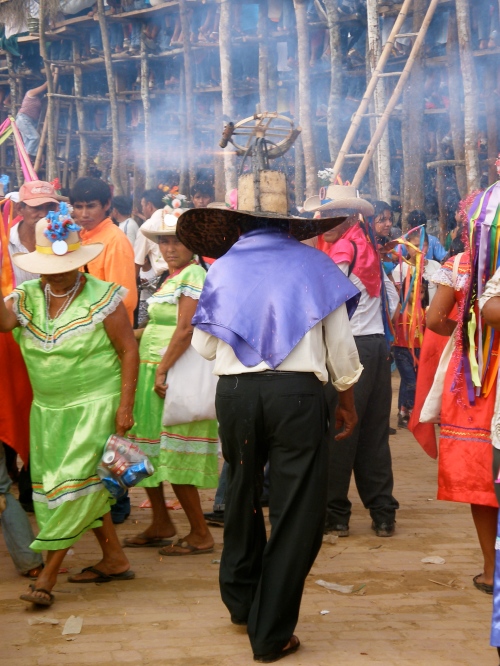
Revelers wander through the crowded streets of town during their fiestas patronales, while trying to avoid the path of drunk men who careen through the crowds with fireworks alight atop their hats.

AUGUST 2008

dscf1120

Comunidad Sotani, Chuquisaca, Bolivia

I finally got to visit one of the distant satellite schools under the La Palma jurisdiction. This, the closest of the 6, is a 17km hike (mostly uphill) from La Palma. I was the first foreigner to ever visit this school. I was so looking forward to working with these kids. And was practicing my Quechua so I could communicate with them.

SEPTEMBER 2008

img_1142e

Sucre, Chuquisaca, Bolivia.

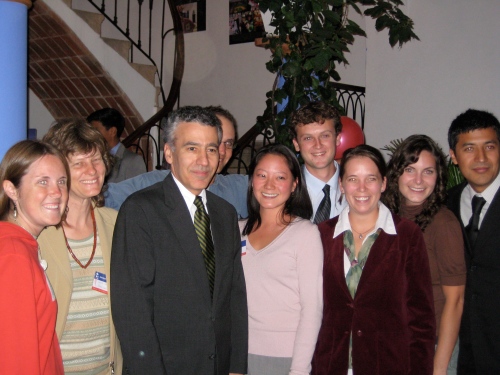
The unanticipated events that unfurled less than a week after this photo was taken indirectly shaped the rest of my experience in Bolivia. Here, several Peace Corps volunteers and friends of Peace Corps pose with former US Ambassador, Phillip Goldberg, who had come to Sucre for an official Embassy event in early September. Days later, he was told by Bolivian President Evo Morales that he was considered a persona non grata, and was asked to leave the country.

OCTOBER 2008

pa220247

Parque Provincial Aconcagua, Mendoza, Argentina.

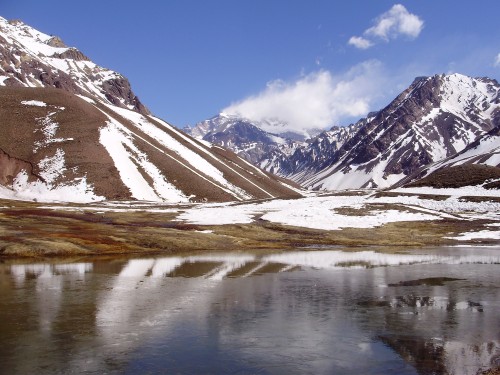
After deciding to close my service with Peace Corps following the suspension of the program in Bolivia in September, I took a vacation to Argentina with dear friends.  Standing in the presence of Aconcagua, the highest mountain outside of the Himalayas, was absolutely the highlight.

NOVEMBER 2008

img_5900

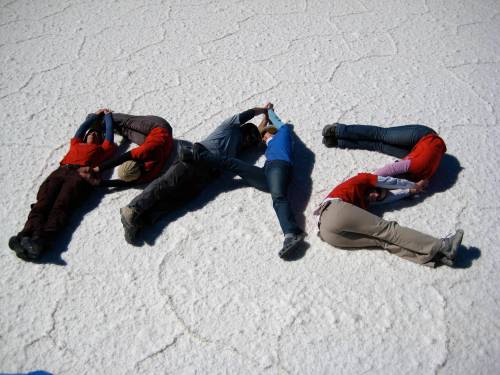
Salar de Uyuni, Potosi, Bolivia.

A simple, yet universal plea.

DECEMBER 2008

dscf1354

Sajama, Oruro, Bolivia.

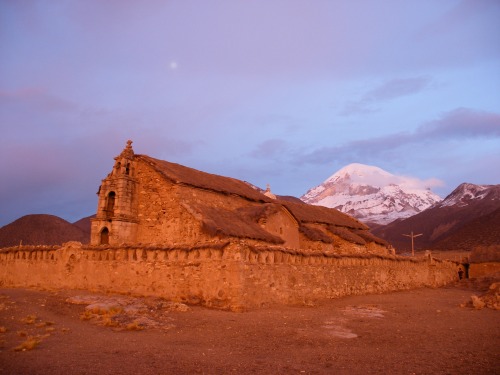
Potentially my favorite place in all of Bolivia, the town and the peak of the same name (Sajama) are delicately washed with late afternoon altiplano light.  Sajama also happens to be the tallest peak in Bolivia.

JANUARY 2009

dscn3042

Trinidad, Itapua, Paraguay

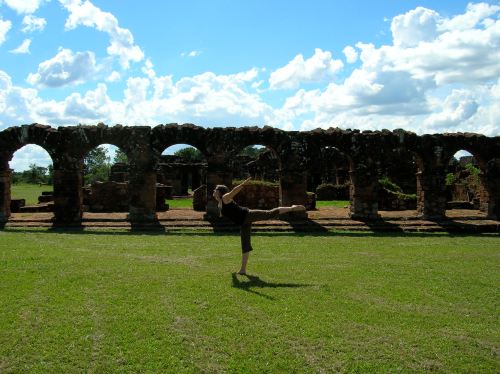
The Jesuits were expelled from Paraguay in the 1850s, but the ruins of their missions still remain.  The ruins of Trinidad, outside of the city of Encarnacion are one of the least visited UNESCO World Heritage Sites in the world.

Paz.

Posted by: helenrortvedt | 21 January 2009

Images.

100_1412

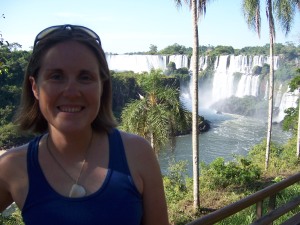
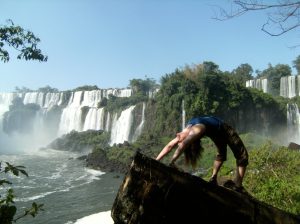
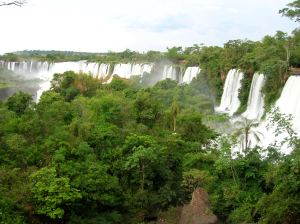
Yours truly in front of what is arguably the largest waterfall in the world.  Some measuring methods put Africa’s Victoria Falls in the number one slot, some say it’s Iguazu.  True to its Guarani name, this is big water, regardless if it is the biggest!

100_1416

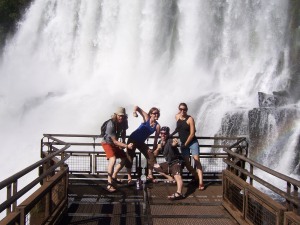
You can take the Adventure Links staff out of the Mountain, but you can’t take the Mountain out of the Adventure Links staff.  Chuck, RoK, Kelley and I rock our our favorite Yee-Haw poses in front of some crazy big water!

dscn2726

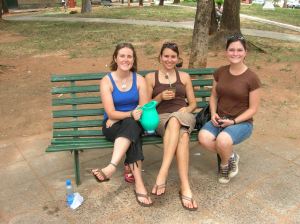
Paraguay is hot. Really hot.  But the Paraguayans have invented an ingenious hydration system: terere.  Yerba Mate and ice cold water, often with other herbs for digestion and calming mixed in.  Sipped and passed. Always shared. Brilliant. Liters and liters are consumed daily. Here, me, Kelley and former Bolivia volunteer, Natalie, are sharing terere in the Plaza Uruguaya in Asunción.

dscn2734

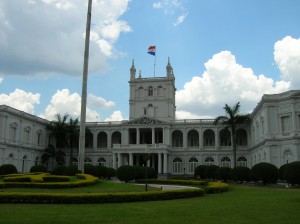
Presidential Palace. Asunción, Paraguay.

dscn2761

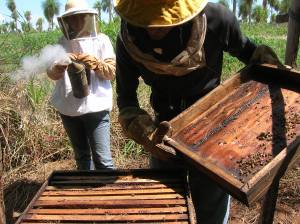
Andrew (another former Bolivia volunteer) shows us his bee colonies in his new site in Paraguay. That’s me rocking the smoker in the background, looking as cool as ever.

dscn2800

Kelley makes new friends all the time. :)

img_6322

Me, Kelley, Andrew and his host brother, Fernando.  Hangin’ out in the Paraguayan campo. You know. Typical Thursday night.

dscn2821

Are there words?

img_63711

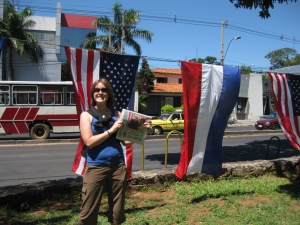
Obama-mania has come to Asunción! The American flag flies next to its Paraguayan counterpart on Inauguaration Day.  I am holding the daily paper withe the beautiful First Couple on the front page! I think the Obama’s made it on the front page of newspapers in every country in the world yesterday! A wonderful day to be an American. A wonderful day to be able to represent my country in a foreign land.

img_6386

It just had to be captured.  History only happens every day, you know…

Posted by: helenrortvedt | 12 January 2009

Life blurs in constant motion

It’s been a while since I posted. I know. And much has happened. If I had the time, I would give each of the following events the time and webspace they truly deserve. But, alas, the life of a wanderer that I am currently living doesn’t often allow for such luxuries.

Since returning from Sajama in early December, I traveled to the Yungas region of the La Paz department (think: coca, cacao and mangoes!). The town of Chulumani (read: Coroico minus the tourists) is the center of the small Afro-Bolivian minority population living in the fertile lands on the steep Andean slopes in this transition zone. It was a great contrast from the stark beauty of the altiplano. Beauty in the Yungas comes in the form of fruit so fresh and delicious, it melts in your mouth; people so friendly you can’t stop yourself from chatting; traditional dancing to a drum beat hauntingly rooted in West African rhythms…

dscf1363

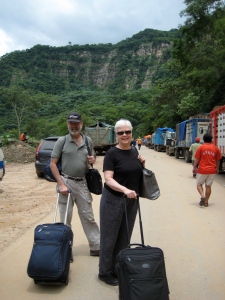
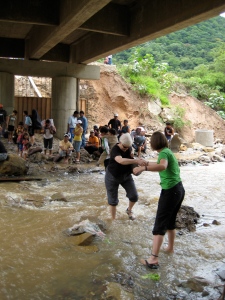
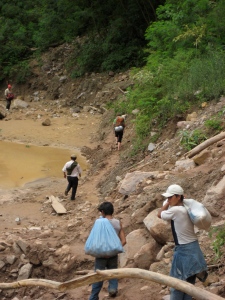
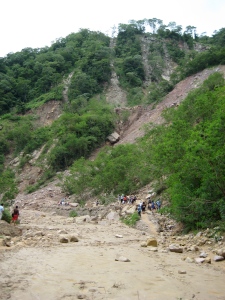
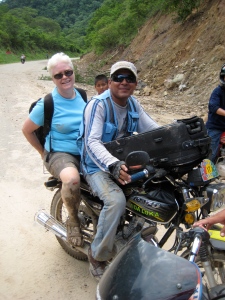
A few final days in La Paz, a final 18 hour Bolivian flota ride, then a few sweaty days in Santa Cruz to meet up my my parents (first time I had seen them in almost a year!), and we were off for the next adventure: getting to Samaipata from Santa Cruz in the rainy season! Getting there was an adventure. Being there was a relaxing dream. Getting BACK was epic. I was proud of my parents for wading across a river, crawling up and down the river banks with their rolly suitcases, and walking across a landslide on the way there… I was speechless after our journey back. After an all day rain (on Christmas Day, no less), the road conditions worsened for our journey home. All in all, the should-be 2 hour journey took us about 8 hours and included 2 taxis, 1 truck bed, 1 10km section on the back of motorcycles, 1 river forded, and one 500m long recently fallen mudslide with knee-deep quicksand-like mud crossed while mud and rocks continued to fall from above. A true Bolivian transit adventure. But, true de form, Bolivians ALWAYS find a way through. And we followed them. :)

img_0019

On the way to Samaipata. Still smiling! No idea what they were about to get themselves into. Mom and Dad learned the hard way that rolly suitcases are less than ideal for Bolivian travel! :)

img_0021

Helping Mom across the river on the way there.

img_0026

Walking across the landslide on the way there. No big deal.

img_0066

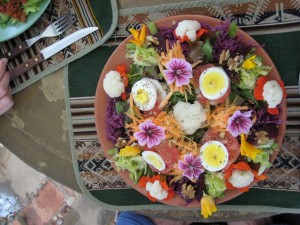
Samaipata was beautiful and relaxing, and certainly worth the trek. This “garden salad” sealed the deal, however. And it’s officially the most beautiful (and 100% edible!) salad on Planet Earth.

img_00731

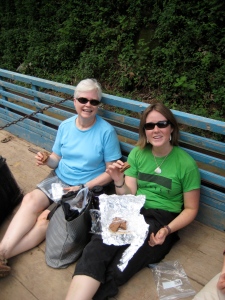
Mom and I enjoy her world famous caramel brownies in the back of the truck bed on our epic journey back to Santa Cruz!

img_00811

This picture in no way conveys the magnitude of this mudslide. It was truly catastrophic.

img_0092

Mom, muddy, but happy to be on the other side of the mudslide, gears up for the next part of the adventure: motos!

After our adventures on the Samaipata-SC road, we headed to Sucre. My parents tried to get to Sucre 35 years ago, but never made it because their rainy-season flight was cancelled…for the whole season. The airport runway has since been paved to allow for rainy season departures and arrivals, but it still lacks landing radar, so, if it is too cloudy, no take offs or landings are permitted. Our fingers were crossed as we waited for our flight to be called in the Santa Cruz airport. Seems as if our bad travel karma was used up on the Samaipata road, and we made it to Sucre without a hitch. Just a 35 minute delay. Well, 35 years and 35 minutes in my parents’ case. :)

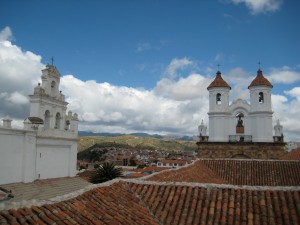
It was wonderful to be “home” in Sucre for a week. It’s my favorite city in Bolivia, and it was great to share it with my parents. It was sad to leave, but I am so glad to have been able to go back one last time. I will miss La Ciudad Blanca.

img_0113

img_0125

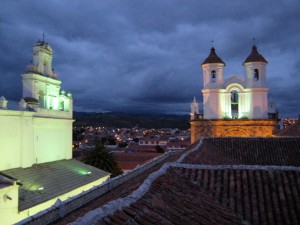
Night and Day time views from the roof of our hotel in Sucre.

img_0162

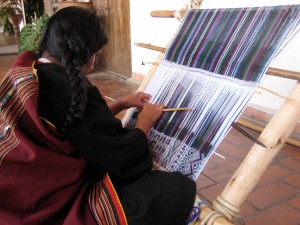
Tarabuco style weaving.

img_0167

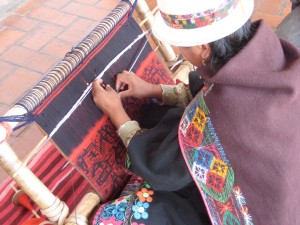
Jalq’a style weaving.

img_0218

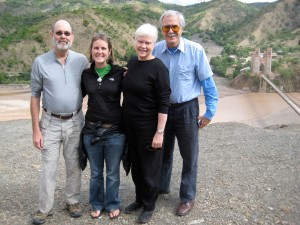
We were fortunate to receive a visit from my godfather, Jim Rudolph, who lives in Lima! Here the four of us are on the road from Sucre to Potosi, posing in front of the Pilcomayo River, which forms the border between the departments of Chuquisaca and Potosi.

img_0270

Mom and Dad in front of the Cerro Rico during our day trip to Potosi.

img_0337

We visited La Palma one day and my self-proclaimed in-site mother, Doña Justina ran up to greet us enthusiastically informing my mother that in fact she was now my mother, and my own needn’t worry about me anymore. It was pretty hilarious. And awfully bittersweet. Crazy as she may be, I love and miss that lady.

On January 4th, I bid farewell to my beloved Bolivia. I flew through clear skies to the Good Airs of Argentina and met up with friends Kelley, Chuck and RoK… all of Adventure Links fame. We spent some time wandering through the various neighborhoods of BA, then hightailed it up to Puerto Iguazu on the Paraguayan and Brazilian borders. Puerto Iguazu sits just 15km from the infamous falls of the same name.

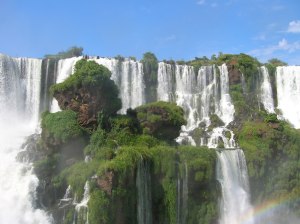
Iguazu. It truly is breathtaking. Contrary to popular belief, the majority of the Falls actually fall (hah) in Argentinian territory. Brazil only has about 10 or 15% of the falls in its territory. What Argentina does lack is the full panorama, as seen from the Brazilian side, but it certainly makes up for it by being able to stand mere feet from the base of some of the cascades and literally get drenched by just the spray. An incredible place.

dscn2487

RoK, me and Chuck in Buenos Aires.

100_1419

Whoa.
dscf0480

dscn2575

100_1445

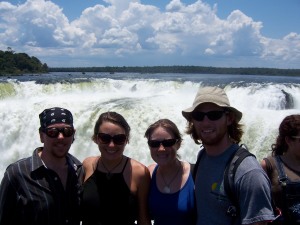
Adventure Links crew in South America. RoK, Kelley, me & Chuck at the “Throat of the Devil”, the largest single wall of water at Iguazu. To describe it in a word: deafening.

100_1460

dscn2629

Inspiration for the word awe.

I now find myself in Asunción, Paraguay. One of the more unique places I have been in South America. I cannot say that Asunción reminds me of any other place in the world. It is not a particularly beautiful or interesting city, but it is certainly unique. I am visiting some Peace Corps volunteers that transferred here after evacuation from Bolivia. It’s been wonderful to see some familiar faces, meet other volunteers and get a more local perspective on an otherwise uninticing city. I very much look forward to getting out to the campo over the next few days to explore more of this infrequently touristed nation. We are hoping to get to visit one of the least visited UNESCO World Heritage Sites in the world–the Jesiut Mission Ruins near Encarnación, in the south of Paraguay.

Whew. That was a lot. I won’t even get into all the stuff I left out. That would take, well, about a month. :)

Love from Paraguay. Love to Bolivia. And love to you. Yes, you.

Posted by: helenrortvedt | 28 December 2008

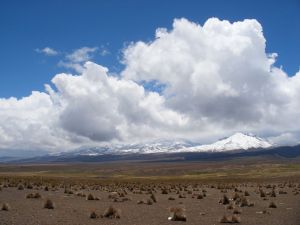
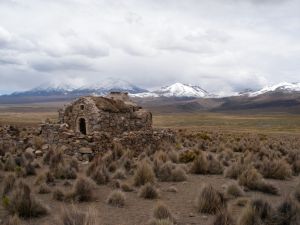
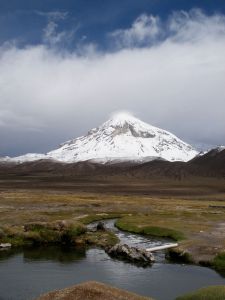
Nevado Sajama

Nevado Sajama is Bolivia’s highest peak. It’s summit is a cool 6,542 meters above sea level. That’s 21,463 feet. You pretty much have to go to Asia to see peaks much higher than this.

It also happens to be the best place place I have visited in Bolivia so far. And, you all know how I love Bolivia, so I feel that is actually saying something.

We traveled by flota (large bus) and trufi (very small micro bus) to the village of Sajama, which lies in the shadow of the Chilean border in the Department of Oruro. We arrived in the drizzling rain around 5pm, but set out on foot anyways towards the hot springs where we had planned on camping that night. About an hour into our hike, the rain turned to snow. Despite it being mid-summer here in the Southern Hemisphere, it is also the rainy season, and the village of Sajama sits at 4200 meters (nearly 14,000 feet). Bottom line: it is still cold enough to snow up here this time of year.

We arrived at the hotsprings, cold and wet, just as night fell, but quickly jumped in the 90 degree water to warm up. We awoke to a midsummer winter wonderland the next morning. The snow melted by early afternoon, and the clouds lifted to reveal Sajama in all her glory. In a word: Spectacular.

We spent two days swimming in the hot springs, hiking around the base of Sajama and taking in the unique and awe-inspiring landscape. Truly, one of the world’s most special places.

dscf12341

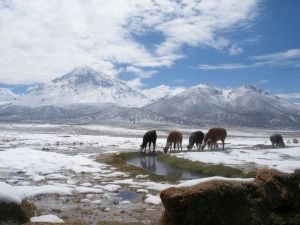
Winter wonderland, complete with grazing llamas.

s7300819

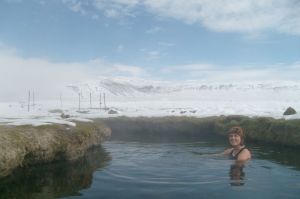
Relaxing in the hot springs.

dscf1243

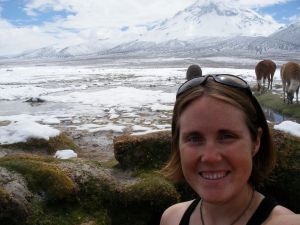
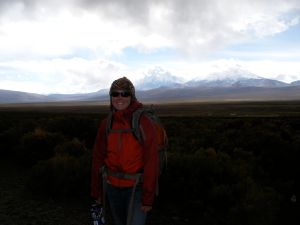
Me and Sajama.

dscf1265

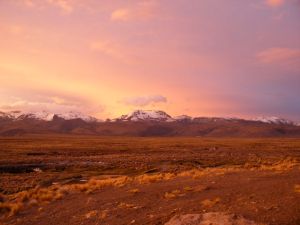
Altiplano sky.

dscf1267

Sajama.

dscf1279

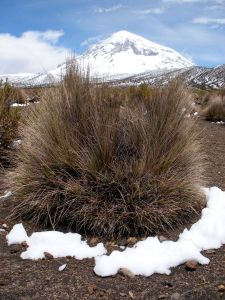
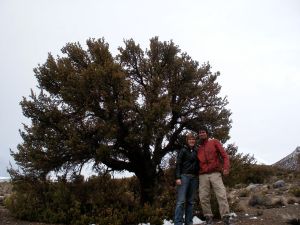
The base of Sajama is covered by the world’s highest forest. Dwarf queñua trees only grow in the altiplano from 4300 to 5200 meters above sea level! Ryan and I found the tallest one around to pose in front of…

s7300844

Sunset. Twin Chilean Volcanoes in the background.

dscf1299

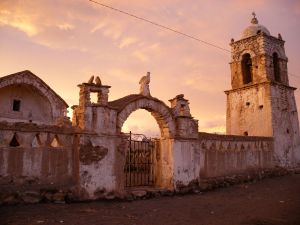
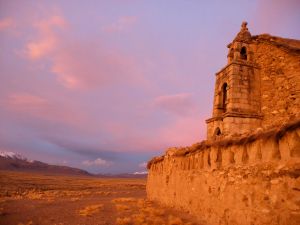
Church in the campo. Chilean volcanoes in the background.

dscf1305

More of beautiful Sajama.

dscf1313

Hiking back to Sajama pueblo from the hot springs.

dscf1335

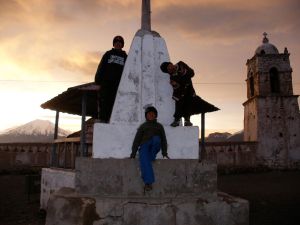
Great kids in Sajama pueblo at sunset.

dscf1342

Church in Sajama pueblo.

dscf1348

Altiplano sunset.

dscf1351

dscf13541

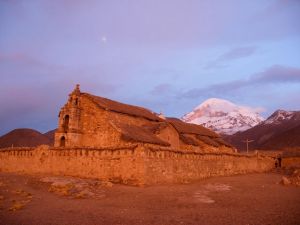
Sajama pueblo and peak at sunset. Glorious.

Posted by: helenrortvedt | 28 December 2008

La Paz. Remember to breathe.

I could take the time to list all the “world’s highests” that can be found in La Paz, but that wouldn’t paint the proper picture of the city I have come to know and love over the past few months.

It’s true that La Paz is the world’s highest capital city (followed by Quito, and then ever-so-closely by Bolivia’s judicial capital, Sucre). It’s also true that its airport (which is actually in El Alto, the closest thing to a suburb that Bolivia can muster, but don’t expect to find a Starbucks here, El Alto is one of Latin America’s fastest growing, most indigenous and frenetic cities) is the highest commercial airport in the world. The landing strip is extra long to allow for longer braking time at 4,010 meters above sea level (over 13,000 ft).

But, rather than dwell on these superlatives, I’d like to share a little bit of what La Paz has meant to me.

As I left for the bus terminal last Sunday afternoon, Don Francisco, the kind soft-spoken man who manages the day shift at the Hostal Austria (my home in La Paz) joked that I should just get married and stay in La Paz and that my parents would understand. La Paz, by Bolivian standards, is a metropolis. And, true de form, it is filled with busy city folk. But the Don Francisco’s and the chatty licuado (fresh fruit juice) ladies quickly break down the big-city stereotypes.

After my first trip to La Paz in early October, it has become somewhat of a home base for me as I have explored Bolivia in my post-Peace Corps adventures.

While it isn’t the most beautiful of cities, it is certainly dramatic. The vast altiplano abruptly gives way after El Alto and tumbles downward into the valley where La Paz is found. Buildings cling to the sides of the steep mountain valley walls as the city sprawls downward. La Paz, due to its altitude might be one of the only cities in the world that defies the standard practice of rich folk to build their homes higher in order to get “the view”.  In La Paz, the lower your altitude, the higher your status…

I spent many days over the past few months running errands in La Paz (dentist visit, applying for a Paraguayan visa at the Embassy, shopping for artesania, recharging on good food after trips into the campo, etc.).  I have come to love the chaos, the simultaneous colonial and indigenous charm, even the public transportation system.

I feel fortunate to have been able to spend time getting to know this frenetic place.  It is rarely a traveler’s favorite place if they just pass through, but, give yourself time to adjust and La Paz will not disappoint.

dscf1175

Mt. Illimani (well over 20,000 feet high) looms over the city of La Paz.

dscf1163

La Paz is a shoppers dream. Streets are lined with hundreds of stores selling locally crafted art and goods. Alpaca sweaters and silver jewelry fly off the shelves of the stores on Calles Sagarnaga and Linares.

dscf1176

View of La Paz from the children’s park, which also happens to host one of the best views of the city. And an alligator slide. :)

dscf1196

Plaza Murillo. Presidential Palace (read: Evo sleeps here!) and Cathedral. The hostel I stay in is about one block away from here.

dscf1205

Calle Yanacocha. Trufis, taxis and Micros labor their way up this steep thoroughfare all day long.

dscf1209

The Wiphala is the rainbow-colored flag representing Indigenous rights, culture and heritage.

dscf1215

Tiwanaku. These pre-Inca ruins outside of La Paz are still being excavated, but archaeologists have already revealed sophisticated treasures, art and evidence of the scientific achievements of the Tiwanaku culture which thrived around Lake Titicaca as far back as 1500 BC.

dscf1219

La Puerta del Sol. The Gate of the Sun.

dscf1222

Detail.

dscf1225

Yours truly.
dscf1226

La Paz, as seen from the El Alto highway.

Posted by: helenrortvedt | 17 December 2008

Belated Message of Thanks

dscf1136

Things that I found myself being grateful for as I tried desperately to prepare a turkey in a Bolivian oven, without ever having done so in a normal oven before in my life:

  • Bolivia.
  • Friends, new and old. Around the world.
  • An unconditionally supportive family.
  • This unexpected time in my life to explore this continent, myself, my thoughts on the future and what has come before.
  • Potatoes.

Thanksgiving is a fabulous holiday, and this year’s was certainly memorable.

dscf1138

Thanks. Gracias. Pachi.

Posted by: helenrortvedt | 24 November 2008

Oruro

The palindromic capital of the department of the same name is not often on the “must see” Bolivian itinerary, but, it is well worth a visit. While it is home to an infamous Carnaval celebration each February, the rest of the year, the streets of Oruro are nothing but tranquilo.

I had the privilege of having Diana show me around. Oruro was her regional city and she got to know it pretty well in our short 5 months as volunteers. Oruro is higher than La Paz (slightly lower than Potosi) and smack dab in the middle of the true altiplano.

From the top of the hill that dominates the vista to the west, you can literally see for miles and miles and miles. It is one of the more extraordinary things I have seen in Bolivia. And at this point, I feel like that is really saying something.

Oruro has a similar energy to that of Potosi, and has a long standing mining tradition as well. But a distinct lack of tourists in Oruro make it feel that much more authentic, that much more gritty, that much more raw…

I only wish I had been able to spend more time there…

dsc06830

Cool mural painted by local school kids depicting the diversity of cultures that come from Bolivia in the heart of South America.

dsc06837

The Cathedral in homage to the Virgin of Sorcaya in Oruro shows how deep rooted mining is in the Orureño culture.

dsc06839

There is actually an entrance to what was once a functioning mine inside the Cathedral. It is now a museum. You can smell the fumes coming up from below. Pretty unreal.

dsc06851
dsc06873

Oruro, in all her late afternoon, altiplano glory…

dsc06858

Jallalla!

Posted by: helenrortvedt | 24 November 2008

Birthplace of the Sun

According to Quechua and Aymara legend, it was here, on the Isla del Sol (Island of the Sun) in the southern (and Bolivian) end of Lake Titicaca, where the bearded God-King Viracocha first appeared and commanded the Sun and the Moon to be born.  The first Quechua people, Mano Capac and Mama Ocllo were also born on this island.

Legends aside, Isla del Sol is one of those rare places on Planet Earth that just commands respect, humility, and reverence.  It has a certain energy about it, rather indescribable, but extraordinarily tangible in sitio. It was (and remains) an important pilgrimage site for the Quechuas (Incas), Aymaras and travelers alike.

dsc06725

Lake Titicaca with the Cordillera Real in the background. Bolivia. Mind-bogglingly beautiful.

dsc06728

Bolivia lost its access to the sea to Chile over 100 years ago, but they still maintain a Navy that patrols the waters of Lake Titicaca.  Nevertheless, it’s funny to see young Bolivians in Sailor uniforms!

img_5331

Ch’allapampa is the second largest community on the Isla del Sol.  It sits on this narrow isthmus near the north end of the island.

img_5367

Where the two paths around the island converge at the north end.

img_5374

The Incan ruins on Isla del Sol, also known as “The Labyrinth” are perfectly situated to watch the sun set towards Peru.

img_5398

dsc06753

Life is just good sometimes. Our shirts (yes, we know they match) say “Jallalla”, which is the Aymara term for “Cheers!” or “Life!”

dsc06761

Diana, Russ, Tiffany and I taking it all in.

dsc06777

On the boat ride from the north to the south end of the island.

dsc06789

Yumani is the largest community on the Isla. Also the most touristed. We preferred the tranquility of the north end of the island, but did eat the best pizza in all of Bolivia here in Yumani! Las Velas! Go, if you find yourself on Isla del Sol. You won’t regret it!

dsc06792

Friends are so great. Especially the great ones! :) Thanks for all the good times, D! I love you.

dsc06808

The cathedral in Copacabana, on the mainland shore of Lake Titicaca.

dsc06815

Copacabana from a distance. Lago Titicaca in the background.

Did you know?! The name, Lake Titicaca is not in fact a reference to breasts and human waste, but rather a Spanish mispronunciation of the Aymara words Thiti Kharka.  Roughly translated into English it means “Rock of the Puma”, which can be found on the Isla del Sol.  The legends associated with the Isla del Sol, and the physical places on the island that represent their incarnation are what gave the entire lake its name. Pretty cool, huh?

Older Posts »

Categories